
Yoga for Seniors in the Philippines: How Older Adults Are Building Strength, Mobility, and Community
Yoga is often associated with flexibility, difficult poses, and younger practitioners who are already physically active. That perception can make the practice seem inaccessible to older adults, particularly those who have limited mobility or have not exercised regularly in years. In reality, yoga can be adapted according to a person’s existing strength, balance, mobility, and physical capability, making it an option for some adults well into their senior years.
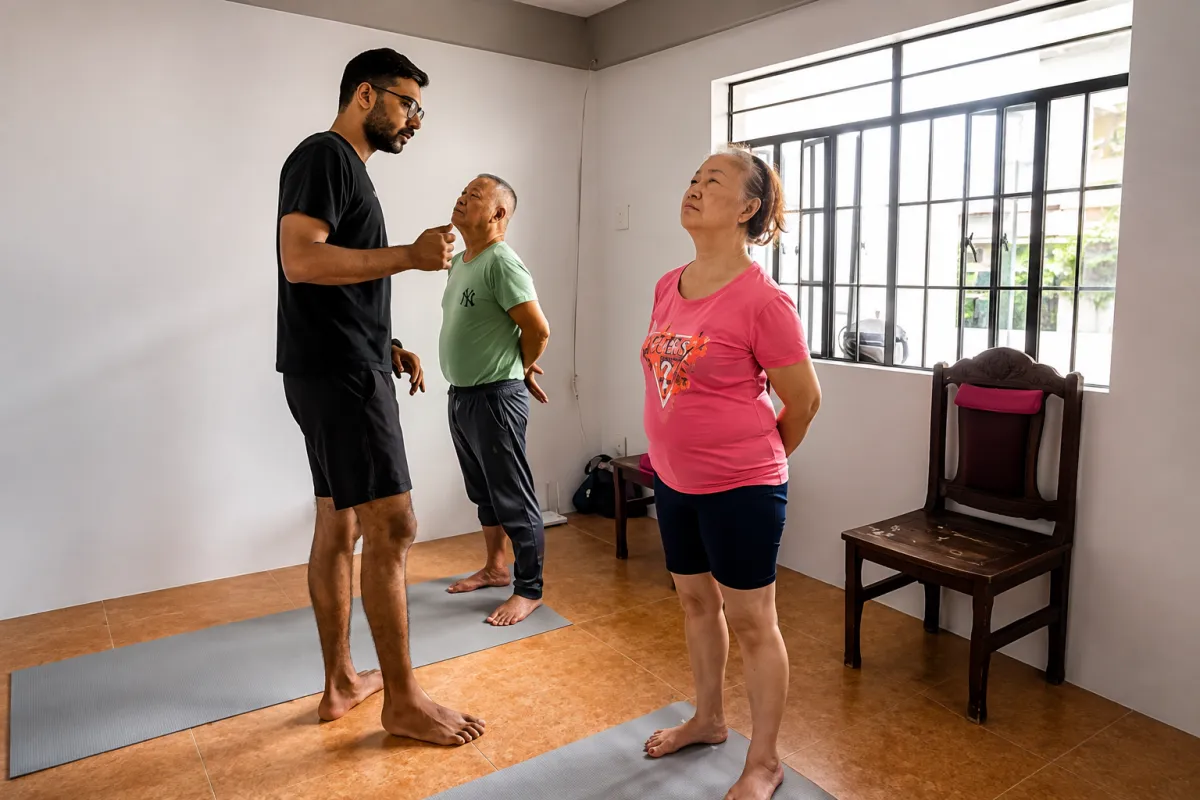
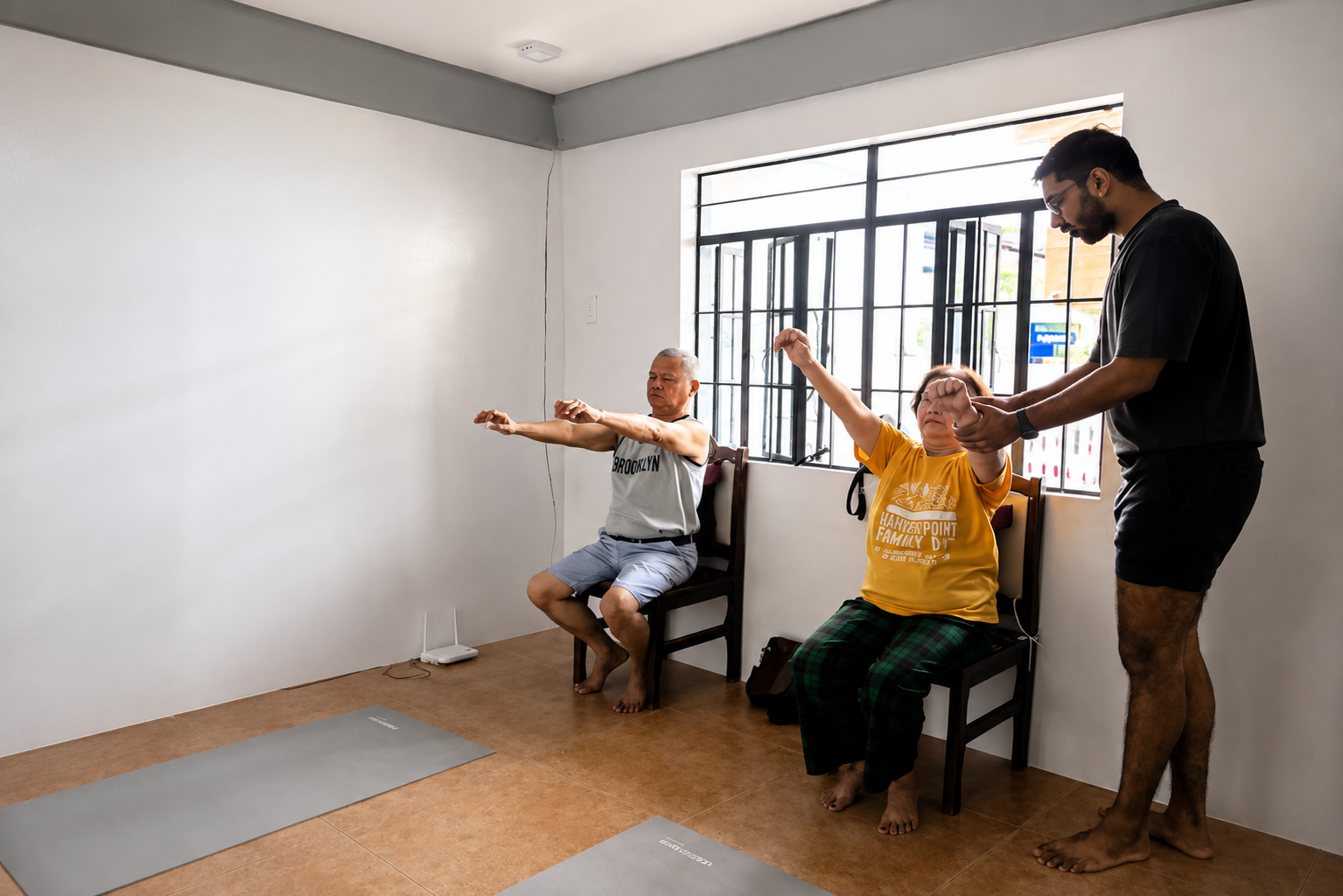
At Indian Yoga School PH, this has become increasingly visible as the school’s community of senior students continues to grow. Adults over 60 are attending sessions with different levels of physical ability, from independently mobile seniors to those who initially require more support. Instead of expecting every participant to perform the same poses, instructors adapt movements and pacing according to the individual.
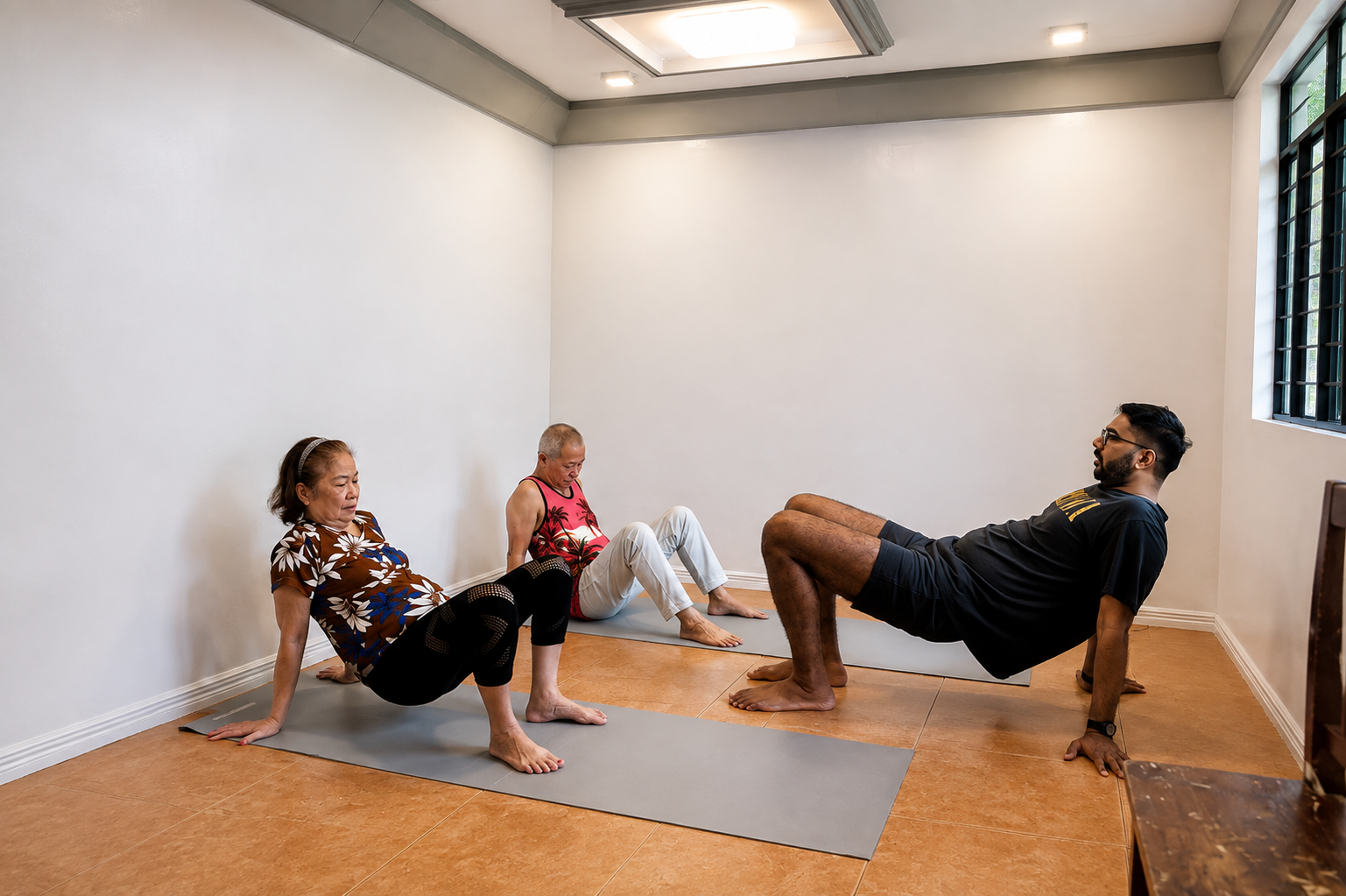
One grandmother’s experience has become particularly meaningful to the school. When she first began attending with her husband, she required continuous assistance while walking. After several sessions, her family and instructors observed that she had become stronger and more confident in everyday movement. She can now sit herself up independently, and the couple has progressed to walking back to their nearby home after class. Just as importantly to her family, she has become consistently excited about attending her yoga sessions.
Her experience is not presented as evidence that yoga alone caused these changes. Rather, it illustrates a broader question becoming increasingly relevant to Filipino families: as parents and grandparents grow older, how can they be given more opportunities to remain active, mobile, socially connected, and engaged?
For older adults, the practice may focus more heavily on controlled movement, balance, joint mobility, functional strength, breathing, coordination, and body awareness. A student who has difficulty balancing, for example, may require additional support, while someone with a limited range of motion may perform a modified version of a movement. Another senior may be independently mobile but need additional time when transitioning between positions.
This adaptability is particularly important because adults over 60 do not represent a single level of physical ability. Two people of the same age can have substantially different levels of strength, mobility, medical history, and exercise experience. An appropriate senior yoga practice therefore works from the individual’s starting point rather than requiring the individual to meet a predetermined physical standard.
Can People Over 60 Start Yoga?
Many adults can begin practicing yoga after age 60, including those without previous yoga experience, provided the practice is appropriate for their health and physical capabilities. Flexibility is not a prerequisite, nor should older beginners be expected to immediately perform complicated poses or participate at the same intensity as younger practitioners.
At Indian Yoga School PH, instructors work with senior students based on what they can comfortably and appropriately do at the time. Some may require assistance with balance or transitions, while others may be able to complete most movements independently. The objective is not to have every student achieve an identical pose, but to provide an appropriate way for each person to participate in the practice.
This distinction can be especially important for older adults who assume they are “too old” or “not flexible enough” to try yoga. A senior-friendly practice does not begin with what someone cannot do. It begins by identifying movements they can perform and building the practice from there.
Why Yoga for Seniors Matters in the Philippines
Senior wellness is becoming increasingly relevant as the Philippine population ages. According to the Philippine Statistics Authority’s 2024 Census of Population, approximately 11.42 million Filipinos are aged 60 and above, accounting for 10.2 percent of the country’s household population. In comparison, senior citizens represented 8.5 percent of the household population in 2020.
This demographic shift makes active aging an increasingly important consideration for Filipino families. Healthy aging is not simply about longevity; it also involves maintaining the functional abilities that allow older adults to continue participating in everyday life. The ability to rise from a chair, walk around the home or neighborhood, maintain balance, get in and out of bed, and participate in family and community activities can have a significant impact on independence and quality of life.
The World Health Organization recommends regular physical activity for older adults and emphasizes multicomponent activities that incorporate functional balance and strength. Appropriately adapted yoga can incorporate several of these elements through controlled movements involving strength, balance, mobility, flexibility, coordination, and body awareness.
Yoga should not be considered a replacement for medical care or physical rehabilitation when these are necessary. However, for older adults who are medically able to participate, it can form part of a broader approach to maintaining regular physical activity as they age.
From Assisted Walking to Greater Independence
For one elderly couple at Indian Yoga School PH, the decision to begin yoga was initially much simpler. Their children enrolled them because they wanted their parents to have an activity they could enjoy and something that would encourage them to get out of the house.
When the grandmother began attending, she required continuous assistance while walking and moving around the studio. Her instructors adapted her participation according to what she was capable of doing rather than expecting her to keep pace with other students. Over the course of several sessions, both her family and instructors began noticing changes in her movement and confidence.
One of the most noticeable milestones was her ability to sit herself up independently. The couple also began walking back to their nearby home after attending their sessions, something that has become part of their yoga routine. Alongside these physical observations, the grandmother’s attitude toward class also changed. She now looks forward to attending and is often excited to show her instructors what she is able to do.
These observations should not be interpreted as clinical outcomes or proof that yoga directly caused the changes in her mobility. An older adult’s physical function can be influenced by medical care, health conditions, nutrition, daily activity, lifestyle, and many other factors. What her experience does demonstrate is how meaningful regular, appropriately adapted physical activity can become in the everyday life of a senior and their family.
Balance and stability are similarly important because the consequences of falls can become more serious with age. Yoga can incorporate controlled standing positions, weight shifting, coordination, and body awareness, with additional support provided when necessary. Flexibility and joint mobility may also be addressed through movements performed within an appropriate range rather than through extreme stretching.
Another component is body awareness. Moving deliberately gives practitioners an opportunity to notice posture, positioning, balance, breathing, and how the body responds to particular movements. For older students, becoming more attentive to movement can complement the broader goal of remaining physically engaged in everyday activities.
The benefits of attending a class can also extend beyond physical exercise. Regular sessions provide a reason to leave the house, interact with instructors and fellow students, develop a routine, and participate in a shared activity. These social and behavioral aspects of senior wellness are part of why active aging cannot be reduced to exercise alone.
What Does a Senior Yoga Class Look Like?
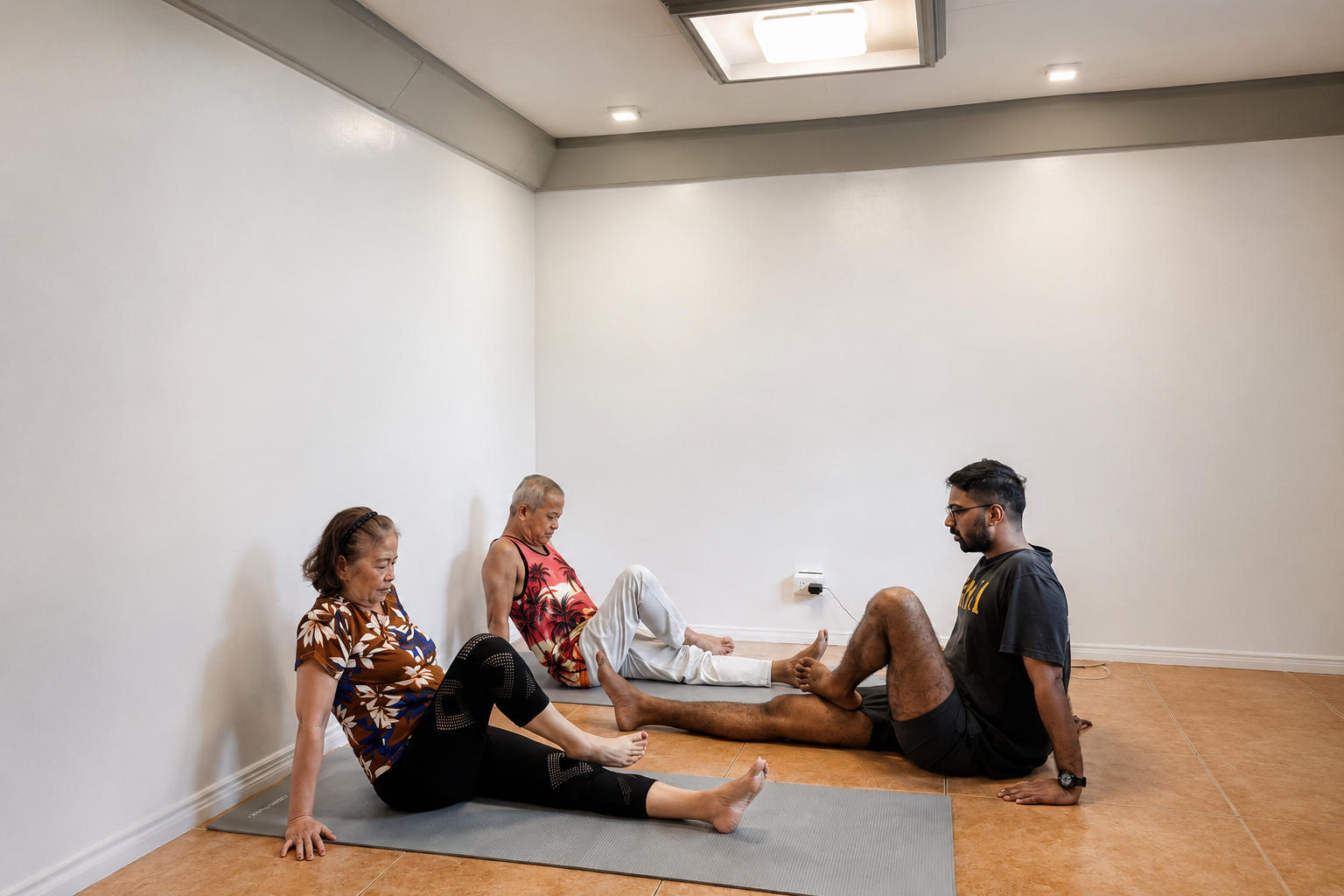
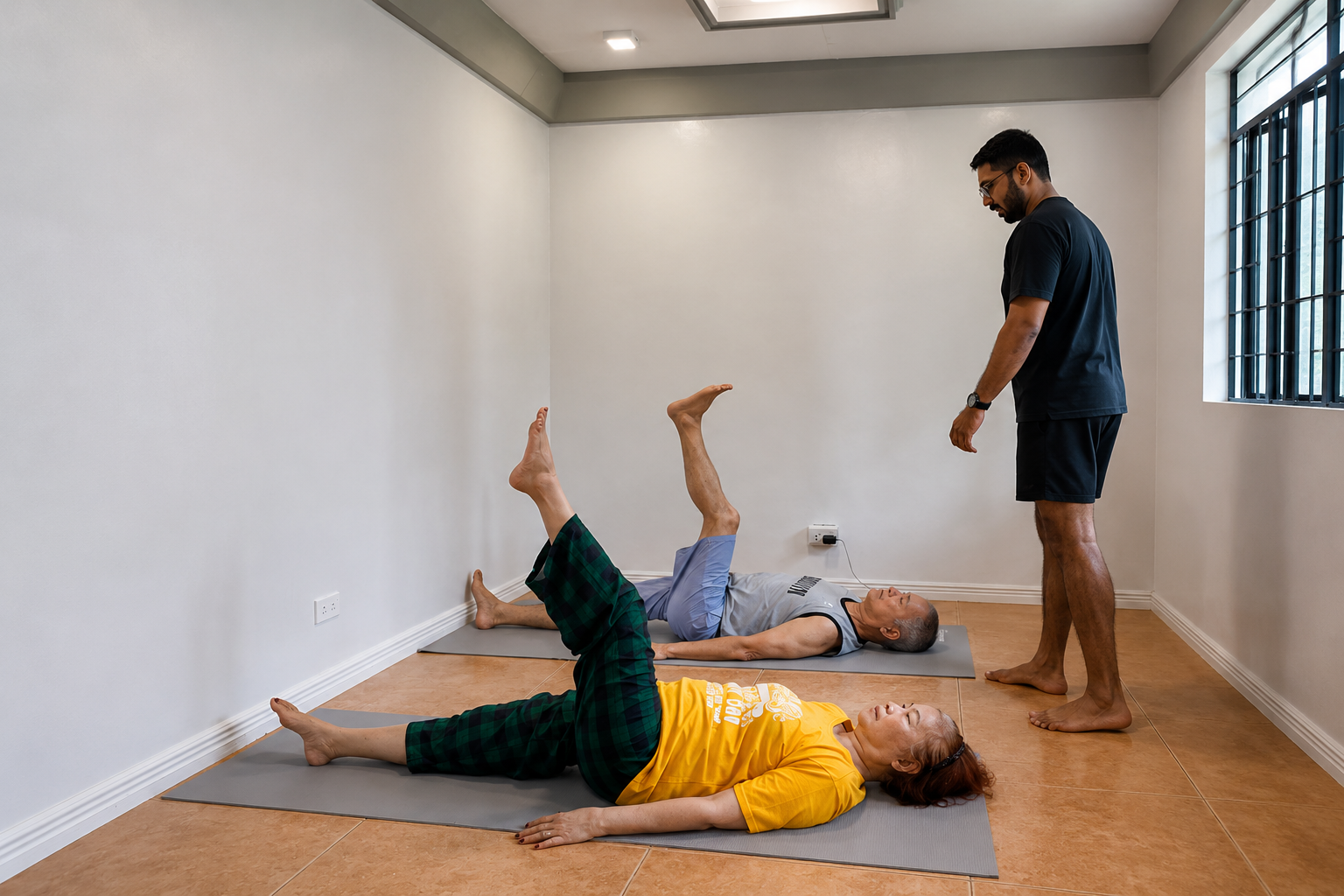
There is no single format that every senior yoga class must follow because the abilities of older students can vary considerably. One participant may be independently mobile and interested in improving flexibility or balance, while another may need assistance with particular movements. Someone else may simply be returning to regular physical activity after spending years relatively sedentary.
At Indian Yoga School PH, movements can be adjusted according to a student’s mobility, strength, balance, comfort, and experience. The pace may also be modified so students have sufficient time to understand movements and transition safely between positions. Rather than treating modifications as an easier or inferior version of yoga, they are used to make the practice appropriate for the person performing it.
This is particularly important when working with older adults. The goal of a senior yoga class should not be to force participants toward increasingly advanced poses. It should be to create an environment in which students can continue moving and developing their practice according to their individual capabilities.
Do Seniors Need to Be Flexible Before Starting Yoga?
Seniors do not need to be flexible before beginning yoga. Flexibility is one of several physical qualities that may be developed through regular movement, not a requirement for participating in the practice.
The misconception that people need to be flexible before attending yoga can be particularly discouraging for older adults. Someone who cannot touch their toes, comfortably sit on the floor, or perform a traditional yoga pose may assume that the practice is no longer suitable for them. However, none of these abilities determines whether an appropriately modified yoga practice is possible.
Progress will also look different from one senior to another. One person may gradually become more comfortable standing or balancing, while another may improve their control during a particular movement. For the grandmother at Indian Yoga School PH, being able to sit herself up independently became one of the changes her family and instructors noticed. Individual progress is more relevant than whether a student can reproduce a particular pose.
Active Aging Goes Beyond Physical Fitness
The World Health Organization frames healthy aging around maintaining the functional ability that enables well-being in older age. This makes active aging a broader concept than simply exercising regularly. Independence, relationships, routines, interests, confidence, and participation in community life can all contribute to how someone experiences their later years.
This broader perspective is reflected in Indian Yoga School PH’s growing senior community. For the elderly couple, their children originally made the decision to enroll them. Yoga was intended to give Mom and Dad something to do together. Over time, however, attending class became something the couple themselves began looking forward to.
That shift matters. A scheduled activity can provide structure to the week while creating opportunities for social interaction, learning, and personal progress. As more senior students have joined Indian Yoga School PH, the classes have also developed into a community where older practitioners see familiar instructors and fellow students and have an activity they can continue working on.
It also challenges the conventional image of who belongs in a yoga studio. A yoga practitioner does not need to be young or capable of performing an advanced pose. They can be over 60, begin with limited mobility, practice alongside a spouse, require modifications, and progress gradually.
Older adults may have health conditions affecting the bones, joints, cardiovascular system, balance, vision, or other aspects of physical function. Previous injuries, medications, recent procedures, and existing mobility limitations may also affect what forms of exercise are appropriate. Seniors with medical conditions or significant physical limitations should consult an appropriate healthcare professional before beginning a new exercise program.
Relevant limitations should also be communicated to the yoga instructor before participating. A senior-friendly yoga environment should prioritize controlled, appropriate movement and should never require someone to continue a movement that causes pain or exceeds their capabilities.
Choosing a Yoga Class for an Elderly Parent
Families searching for yoga for elderly parents in the Philippines should consider more than whether a yoga studio simply accepts senior citizens. The instructor’s willingness and ability to understand the student’s starting point and modify the practice accordingly are important considerations.
Before enrolling a parent or grandparent, families can ask whether instructors have experience working with older adults, how poses are modified for limited mobility or balance, whether the pace can be adjusted, and what health or physical information should be shared before the first session. Depending on the senior’s health and mobility, medical clearance may also be appropriate.
Most importantly, the older adult should feel comfortable participating. The objective is not to turn an elderly parent into an advanced yoga practitioner. It is to provide an appropriate opportunity to move, learn, interact with others, and develop a practice that they can realistically continue.
For Seniors, Progress Can Look Different
Fitness progress is frequently measured through heavier weights, longer distances, more repetitions, or increasingly difficult movements. Those measurements do not always capture what matters most to an older adult.
For a senior, meaningful progress may mean standing with greater confidence, moving with less assistance, becoming more comfortable participating in a group activity, or maintaining enough mobility to continue doing familiar activities. In the case of one Indian Yoga School PH student, her family and instructors have watched her progress from requiring continuous walking assistance during her early sessions to sitting herself up independently and walking home with her husband after class.
Perhaps equally important is that she wants to keep coming back.
Her story does not suggest that yoga is a cure for aging or mobility limitations. Instead, it illustrates why accessible opportunities for movement can matter as people grow older. Seniors do not necessarily need to already be strong, flexible, or physically active before they begin. They need an appropriate starting point, instruction that respects their abilities, and an environment where progress is measured against their own capabilities.
About Indian Yoga School PH
Indian Yoga School PH is a yoga school in the Philippines dedicated to making authentic yoga accessible to students of different ages, backgrounds, and levels of experience. The school offers regular yoga classes, workshops, retreats, and yoga teacher training programs designed to support physical practice, mindfulness, and a deeper understanding of yoga.
Its community includes beginners, experienced practitioners, aspiring yoga teachers, and a growing number of senior students. Through adaptable instruction, Indian Yoga School PH encourages students to practice according to their individual abilities while building strength, mobility, balance, body awareness, and confidence over time.
Beyond the physical practice, Indian Yoga School PH aims to create an inclusive yoga community where students can continue learning, moving, and developing their practice at every stage of life.
